


Here’s something that keeps Matt up at night: the fact that some CBD companies are out there selling vape products with ingredients that have absolutely no business being in your lungs.
Sounds dramatic, right? Except it’s not. The truth is, not all CBD vape products are created equal. While some brands cut corners with sketchy additives, harmful fillers, and ingredients that were literally linked to a national health scare, others (like us) are borderline obsessive about keeping things clean and safe.
If you’ve ever looked at the ingredient list on a vape product and thought, “What even is this stuff?”—you’re not alone.
Most people have no idea what they’re actually inhaling, and honestly? That’s a problem. Whether you’re comparing cbd vaping and tinctures or curious about how fast cbd vape effects kick in, none of that matters if you’re inhaling something harmful. So let’s fix that.
We’re about to break down exactly what goes into a CBD vape, which ingredients are safe, which ones are dangerous, and why we refuse to use anything that doesn’t meet our ridiculously high standards.
Because here’s the deal: Avida uses only the safest ingredients in our lab-tested CBD vapes, and we think you deserve to know exactly what that means.
The “Big 3” Carriers: PG, VG, and MCT
CBD can’t exist in a vape cartridge on its own. To be vaporized and inhaled, it needs a carrier liquid, sometimes called a base or solvent, that allows the CBD to heat evenly and turn into inhalable vapor. The type of carrier used has a direct impact on how CBD vape juice performs, including vapor production, throat feel, and overall consistency.
Most CBD vape products rely on propylene glycol (PG), vegetable glycerin (VG), or MCT oil as their carrier. These bases behave very differently when heated, influencing factors like vapor density, flavor clarity, and how smooth each draw feels. Having a clear understanding of how CBD vape formulations are built makes it easier to evaluate quality, especially when learning what CBD vape juice is and why formulation choices matter.
MCT oil is sometimes used as an alternative carrier, though its suitability for inhalation has raised concerns among manufacturers and consumers alike. Knowing why some brands avoid MCT oil — and what they use instead — helps users make more informed decisions about what they inhale, particularly when reviewing MCT oil in CBD vape products.
Let’s break them down, hemp-nerd style.
PG (Propylene Glycol): The Flavor Carrier
Propylene Glycol is a thin, colorless liquid that’s been used in food and vaping products for decades. It’s the ingredient that carries flavor really well and creates that satisfying “throat hit” when you inhale.
The FDA classifies PG as “generally recognized as safe” (GRAS), and it’s been extensively studied for inhalation safety. You’ve probably been exposed to it already, it’s used in asthma inhalers, fog machines at concerts, and even some food products.
In CBD Vape Juice, PG helps deliver a smooth, consistent draw and makes sure the CBD is evenly distributed throughout the liquid. It’s clean, effective, and totally safe for inhalation when sourced properly.
VG (Vegetable Glycerin): The Cloud Producer
Vegetable Glycerin is a thicker, slightly sweet liquid derived from vegetable oils (usually soy, palm, or coconut). It’s what creates those big, fluffy vapor clouds you see people exhaling.
Like PG, VG has GRAS status from the FDA and has been used in everything from toothpaste to food products for years. It’s smooth on the throat, gentle on the lungs, and produces a mild, naturally sweet taste.
Most quality CBD vapes (including ours) use a blend of PG and VG to get the best of both worlds, good flavor delivery from the PG and smooth vapor production from the VG. It’s kind of like how you need both flour and eggs to make a cake. Balance matters.
MCT Oil (Medium-Chain Triglycerides): The Controversial One
MCT oil is derived from coconut or palm oil, and here’s where things get interesting and a little controversial.
Some CBD companies use MCT oil as a carrier because it’s great at dissolving CBD and creates a nice, smooth product. The problem? MCT oil wasn’t originally designed for inhalation.
While there’s ongoing research about the safety of inhaling MCT oil, many experts recommend caution. When you heat and inhale oils (especially thicker ones like MCT), there’s a potential for lipid buildup in the lungs over time, something you definitely don’t want.
That’s why at Avida, we stick with food-grade PG and VG bases that have decades of inhalation safety data behind them. Matt, our product development lead, put it this way: “We’re not interested in being experimental with your lungs.”
Smart guy, that Matt.
The Dangers of Vitamin E Acetate
Okay, time to talk about the elephant in the room, or more accurately, the chemical that sparked a national health crisis and gave the entire vaping industry a massive black eye.
The EVALI Scare
In 2019, a mysterious lung illness started popping up across the United States. People were being hospitalized with severe respiratory symptoms, and the cases were all linked to vaping. The CDC called it EVALI (E-cigarette or Vaping product use-Associated Lung Injury), and it was scary.
After months of investigation, they found the culprit: Vitamin E Acetate—an oily additive that some black-market THC cartridge manufacturers were using as a cheap cutting agent to dilute their products and boost profits.
Here’s the problem: Vitamin E Acetate is perfectly safe when you eat it or put it on your skin. But when you heat it up and inhale it? Your lungs absolutely hate it. It can coat lung tissue and interfere with normal breathing, which is exactly what was happening to those hospitalized patients.
The overwhelming majority of EVALI cases were linked to illegal, unregulated THC vapes not legitimate CBD products. But the damage to consumer trust was done.
Our Stance: NEVER. Not Ever. Not Once.
Let us be crystal clear: Avida has NEVER used Vitamin E Acetate in any of our products. Not now, not ever.
We don’t use it as a thickening agent. We don’t use it as a filler. We don’t use it to make our products look prettier or our margins bigger. It doesn’t belong in vapes, period.
Every single batch of our CBD vapes is tested by third-party labs (you can verify this yourself on our Lab Results page) specifically for the presence of Vitamin E Acetate, and every single time, the result comes back the same: Not Detected.
This isn’t something we take lightly. When it comes to vape lung safety, we’re not interested in cutting corners or taking risks. Your respiratory health matters way more than our profit margins.
If you’re searching for vitamin e acetate cbd or clean vape ingredients, this is the level of transparency you should demand from every brand you consider.
Why Lab Testing Matters (Certificate of Analysis)
Here’s where things get real: Anyone can claim their product is clean and safe. Actually proving it? That requires third-party lab testing.
Every batch of Avida CBD vapes goes through comprehensive testing at independent laboratories. We’re not testing our own products and giving ourselves a gold star, that would be like grading your own homework. We send samples to accredited third-party labs that have zero incentive to make us look good.
What a Certificate of Analysis (COA) Tells You
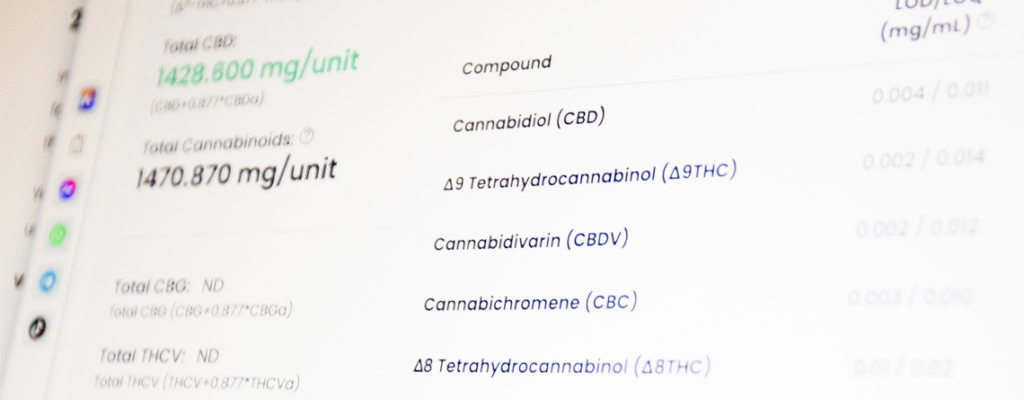
A COA is basically your product’s report card. It shows exactly what’s in your vape—and just as importantly, what’s not in it. Here’s what we test for:
- Cannabinoid Profile: Confirms the CBD content and verifies ND-THC status
- Residual Solvents: Checks for leftover chemicals from the extraction process
- Heavy Metals: Tests for lead, arsenic, mercury, and cadmium
- Pesticides: Screens for harmful agricultural chemicals
- Microbials: Looks for bacteria, mold, and other contaminants
- Mycotoxins: Detects toxic compounds produced by fungi
When you look at an Avida COA, you should see “PASS” or “Not Detected” across the board for all the scary stuff. That’s not an accident, that’s the result of sourcing clean hemp, using proper extraction methods, and refusing to use sketchy additives.
How to Read a COA for Residual Solvents
This is where a lot of brands get caught. The “Residual Solvents” section tells you if there are any leftover chemicals from the extraction or formulation process. You want to see results below the acceptable limits, or better yet, below the detection threshold entirely.
Evan, our hemp-xpert who basically has a PhD in reading lab reports at this point, always says: “If a brand won’t show you their COAs, that’s a red flag the size of Texas.”
The Avida Purity Promise
Let’s bring it home with exactly what you’ll find in an Avida CBD vape and what you definitely won’t.
What’s IN Our Vapes:
- Premium Broad Spectrum CBD Isolate: Pure, crystalline CBD extracted from US-grown hemp. This ensures that every CBD Vape Pen delivers a potent, consistent dose.
- Food-Grade PG/VG Base: The same safe carriers used in FDA-approved inhalation products
- Natural Terpenes: Plant-derived compounds that add flavor and aroma.
That’s it. Three ingredients. Clean, simple, safe.
What’s NOT in Our Vapes:
- ❌ No Vitamin E Acetate (ever)
- ❌ No MCT Oil
- ❌ No Cutting Agents or Fillers
- ❌ No Mystery Ingredients
We’ve built our entire brand on transparency and trust. That means you should always know exactly what you’re putting in your body, and you should never have to wonder if we’re hiding something in the fine print.
Our lab reports are publicly available. Our ingredient lists are short and readable. Our team is happy to answer any questions you have about our sourcing, extraction, or formulation processes.
Because at the end of the day, your health and safety matter more than anything else. Full stop.
Your Lungs Deserve Better
Look, we get it CBD vapes can seem overwhelming when you start digging into ingredients and safety data. But here’s the thing: it should be simple.
You should be able to trust that the product you’re inhaling is clean, safe, and free from harmful additives. You shouldn’t need a chemistry degree to figure out if your vape is going to hurt you. We want you to feel confident every time you reach for an Avida vape pen, whether it’s our CBD pens disposable or CBD Vape Starter Kit, not worried about what might be lurking in that vapor.
That’s why we’re so obsessive about ingredient purity and third-party testing. We want you to feel confident every time you reach for an Avida vape pen not worried about what might be lurking in that vapor.
Clean ingredients. Transparent testing. No sketchy shortcuts.
That’s the Avida standard.
Questions about our ingredients, lab testing, or sourcing? We love talking about this stuff. Seriously, Evan gets genuinely excited about COAs. Hit us up at [email protected] and we’ll geek out with you.


